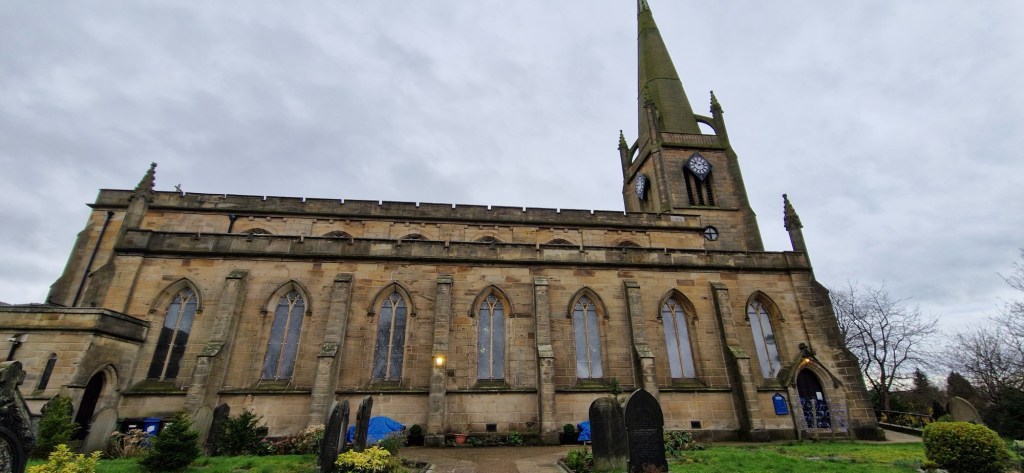
I’m privileged in my role as a Funeral Director to enter a vast array of churches and holy buildings, every church has a deep connection with our past, its like a moment in time frozen for us all to see, beautifully made with stunning architecture, a walk around the churchyards is like a library, bookmarks stand tall detailing a person who had a life, just by reading their names, we bring life and meaning back to them. I believe a large majority of people simply walk past our heritage and don’t give it the attention it deserves. You don’t need to be religious to look around a church, nor are you expected to dig into your pockets, obviousley any donations are gratefully received but they certainley aren’t expected! Also strolling around a graveyard is not morbid and not weird, the stones represent a life, simply by reading the name on the stone be it quiet or out loud you temporarily resurrect that persons memory. I have written the following piece in conjunction with a printed booklet you can aquire within the church, it’s a facinating history of this beautiful building, and sharing it is the right thing for me to do.
The Origins of the Church
In the early 1800’s, it was becoming evident that the rapid growth of towns, a consequence of the Industrial Revolution, was fast outrunning the provision of church buildings. Accordingly, in 1818 the Church Buiding Society was founded with a large subcriptions from the King and others. The largest gift was that of £1 million pounds by the government as a thanksgiving for the victory at Waterloo, followed by another 1/2 million pounds in 1824. An ambitious programme of church building was set in motion, and one of the beneficiaries was the village of Tildesley (as it was known) in the parish of Leigh.
Unlike neighbouring Astley and Chowbent, Tildesley had no church building of its own. Sensitive to the needs of the village, the church Commissioners promised £17,000 (£2,706,889 in 2024) to build a church and Thomas Johnson, the owner of the Banks Estate, gave a plot of land on which to build it. The foundation stone was laid on St. George’s day 1822, and the building itself was completed two and a half years later, in November 1824. It was built in designs by Sir Robert Smirke R.A in the early pointed style, once popular in the eleventh century.
There has always been a belief, that the plans for St. George’s Chapel, Tildesley, and those for St. George’s Church Chorley, were unwittingly exchanged, with each place ending up with the wrong church. However, after discussions with the author of a book on the history of Chorley Parish Church, who has investigated this story thoroughly, and found no evidence to substantiate it, it can be concluded without doubt that this story is untrue, and it can be dismissed it can be concluded without doubt that this story was untrue, and it can be dismissed. It is true however, that for whatever reason, the original plot of land given by Thomas Johnson was too small to support the building and additional land was given by George Ormerod, who had inherited the Banks Estate, thus increasing the site to it’s present size. On the 10th August 1825, six carts arrived at Leigh, each carrying a bell. When the bells had been unloaded, the largest one was turned upside down and filled with ale from all the inns in Tildesley. During the ensuing celebrations, such was the shortage of pint pots, that some villagers drank from their hats!
The Consecration of St. George’s Chapel and Developments During the 19th Century.
St. George’s Chapel was consecrated on the 19th September 1825 by the Rt. Rev Dr. Charles Blomfield, Bishop of Chester, in whose diocese Tildesley was situated. (a further 22 years would elapse before the Diocese of Manchester was created). After the consecration, the Bishop confirmed a large number of children and adults. Six days later, the first baptism took place, to be followed by the first burial on the 09th October.
Tildesley was granted a ‘Parish’ status in late 1829 which carried with it permission to administer the sacrament of Holy Matrimony. The first marriage was solemnized on the 07th September 1829, with the bride and groom making their mark (i.e.; an ‘X’) in the parish register. In 1847 the first public clock in the village was erected on the church tower, whose spire rises 150 feet. Unlike the present clock, it had three faces, and was paid for by public subscription.
It is possible from parish records to build up a reasonably accurate picture of what the interior of the building was like in those days. The East wall stood where the alter rail is now, and on it, in beautiful gold lettering on a Crimson background, were the words of the Apostles Creed, the Lords Prayer, and the Ten Commandments. At the West end of the church, a second gallery stood above the present one, and it was on this upper gallery that the choir and the barrel organ which accompanied them were located. On the same level as the present gallery, two side galleries travelled a short distance along the North and South walls. Most of the pews in the church were rented. They were high and straight backed, with doors at each end. There were some free pews, but these were crude benches which were much more uncomfortable. Sermons were preached from a high pulpit (not the present one), complete with a sounding board behind the preacher’s head. The altar was probably set against the East wall, and no candle or seasonally coloured cutains would have been in evidence.
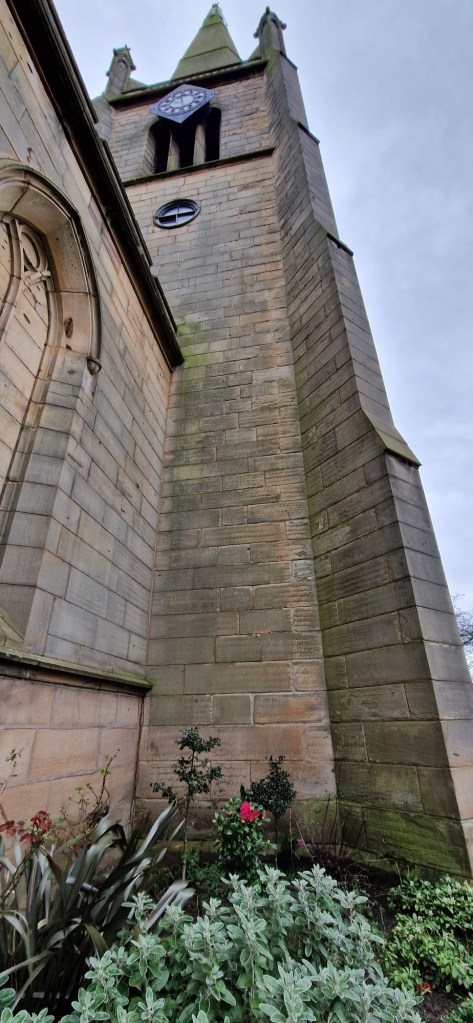
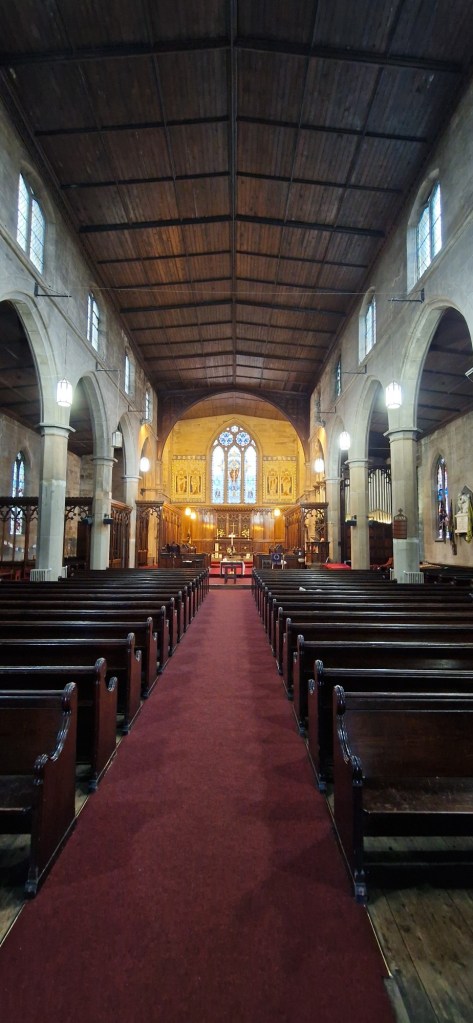
In the course of the second half of the 19th century, a number of alterations were made to the interior of the building. In 1853, the original font was replaced by a larger one, and 7 years later, in 1860, a new organ was purchased at a cost of £350 (£53,333 in 2024) . It was unveiled with great solemnity on Sunday, 14th October 1860, and the builder, Willis of London, later sold the old barrel organ to the Wesleyan Chapel. In 1878, serious damage was caused by a fire in the upper west gallery. The choir and the organ were later moved to the chancel, and in 1866, the upper gallery was demolished. The doorway to the upper gallery was blocked off with lighter stone and is still distinguishable near the top of the west wall. It was probably around this time that the two small side galleries were also demolished. There is little to show that they existed, but just before climbing the last few steps to the present gallery, two steps can be seen leading to a blank wall, previously the entrance to one of the side galleries. But when one door closes, another one often opens. If the west end of the church was losing its galleries, the east end was gaining a sanctuary. In 1886, work began on extending the length of the building, which involved rebuilding the east wall several yards beyond its original position, thus creating space for a sanctuary and the choir stalls. The work was paid for by the children of James and Ann Bayley in their memory. The present church seating was installed around this time, paid for by Mrs Oliver Burton in memory of her late husband. Th completion of the work was celebrated by a series of special services in March 1887.
St. George’s Church in the 20th Century
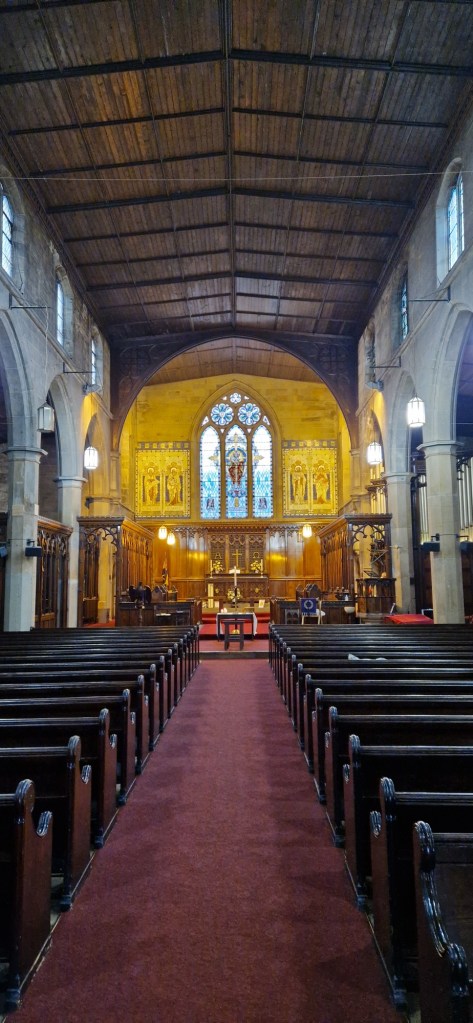
In the early decades ofof the 20th century, more restoration work was carried out and various features added which enhanced the beauty of the interior of the building, and at the same time brought it closer to the church as it is today. In 1910, the Six bells in the church tower were re-hung, and Two new treble bells were added, having been presented to the church by the Sunday schools anc Communicants Union. Three years later, the church clock was erected in memory of the Kirkpatrick Family. Changes to the interior of the building were soon to follow. In 1914 Mrs Ethel Hoyle presented the beautiful mosaics of the four Evangelists which decorate the east wall. The following year the church was lit by electricity for the first time, and not long afterwards two electrically powered candelabra (paid for by the Communicants Union) were installed in the sanctuary. Eventually the candelabra were replaced with lighted candles on the altar itself. The increased illumination within the church stood in stark contrast to the darkness outside it. The world was at war. Between 1914 and 1918, many of St. George’s sons perished in battle, and with the coming of peace, it was decided that a memorial to them should be erected. On the 28th November 1920, the Memorial Chapel was dedicated, which provides a quiet and intimate setting for the churches Sunday evening services. September 1925 marked the centenary of the church’s consecration, and to commemorate the occasion the parishoners installed sanctuary panelling, which was unveiled on the 19th October 1926 by George M. Ormerod a descendant and namesake of the major benefactor of the church 100 years before. Amongst the centenary celebrations, an impressive procession took place and the Rt . Rev. Dr William Temple, Bishop of Manchester (later the Archbishop of Canterbury) preached at the Evensong service.
During the next 20 years no significant changes occured and the church building came through the Second World War (1939 – 1945) unscathed. In 1946 however, various parts of the church suffered damage from mining subsidence. This was a result of a 22 yard coal seam having been cut underneath the church from St. George’s colliery, which was located in an area from the bottom of King William Street to Lemon Street on the south side of the Tyldesley to Leigh, and Tyldesley to Wigan railway line. Repair work was carried out on the east window, the steeple and the church clock, amongst other features. Additionally, the organ was fitted with an electric blower. This period of restoration was also a time for reflection; the Second World War had not damaged the building, but had claimed the lives of many parishoners. In 1951, a second tablet was affixed to the wall of the memorial chapel in their memory.
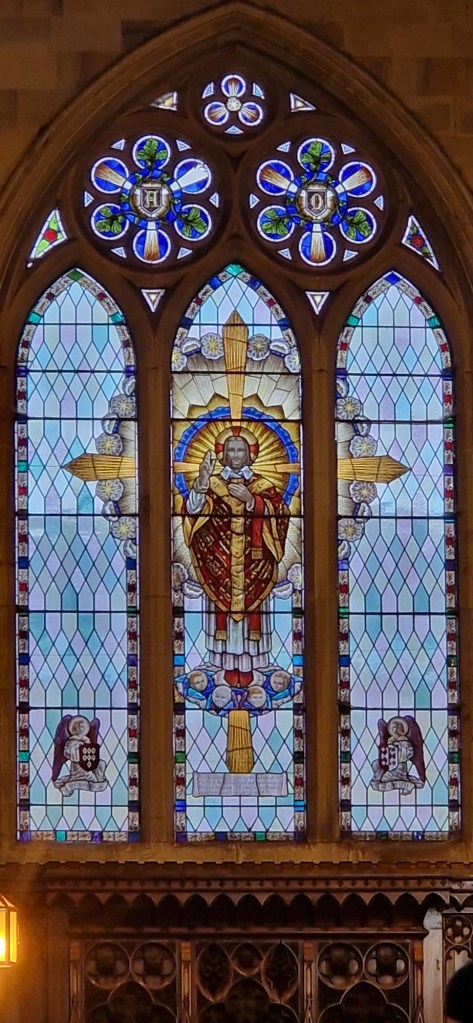
Further changes took place during the incumbancy of the Rev. Lawrence Styles who was inducted as the Vicar of Tyldesley on the 23rd October 1953. For the first time, seasonally coloured curtains were placed beside the altar and altar candles were also used.. The red chancel carpet was purchased and a processional cross was made and donated by Mr. Frank Stott. As a memorial to the past Vicars of Tyldesley, the church commissioners gave four stained glass windows, which were installed in the north and south walls of the sanctuary. These windows formerly of Bishopscourt, Manchester, were dedicated by the Archdeacon of Manchester, the Ven. Selwyn Bean, together with a font cover which had been given to the parish. Mention has already been made of the damage sustained by the east window as a result of mining subsidence in 1946. Despite the subsequent restoration work, early in the Rev. Styles’ incumbancy+ it had become evident that the window given by George Ormerod in 1925 was unsafe. A detailed inspection revealed such serious deterioration that the window was beyond repair. A new east window would be required. The P.C.C. provided £280, (the cost of the central figure of Christ depicted as the Great High Priest) and the rest of the window was paid for by public subscription. The window was doubled glazed for protection and finally unveiled on Easter Day 1958. Pieces of the old window were sold as souvenirs in support of purchasing the new one.
The 1960’s decade was to prove an eventful one for St. George’s, as a period of modest architectural change was followed by a near catastrophe. On the 25th July 1960, the Rev. Oliver St. John was inducted as the eighth Vicar of Tyldesley. At his request, the altar was moved from the east wall to its present position, thus enabling the priest to face the congregation during the Eucharist. In 1965, an aumbry was installed in the wall of the Memorial Chapel, where the Blessed Sacrament could be kept with due reverence until it could be administered to those who were sick or housebound. Within 12 months, on Saturday the 05th March 1966, the church building was seriously damaged by fire. Starting above the wooden ceiling and the roof cavity above the sanctuary, the flames spread along the roof within yards of the bell tower, before being halted by firemen. The blaze lasted one and a half hours, during which half of the roof and one sixth of the ceiling were destroyed. The greatest damage was suffered by the south east corner of the church, (being the seat of the fire), and the sanctuary ceiling collapsed the following morning. In addition, the organ and a number of pews were damaged. It is possible the fire was caused by an electrical fault, but it is more likely that is was due to a faulty boiler chimney. After the fire, the Sunday services were held in St. George’s school hall for a time, but Baptisms, Weddings, and Funerals, continued to be held in the church building (albeit in the western half). By December 1966, restoration had progressed so far that Sunday worship could be resumed in St. George’s church and a thanksgiving service was held the week before Christmas. Work was completed several months later including a new replacement sanctuary rail and the total renovation of the organ. The total cost of the restoration was £12,500 (£291,832 in 2024) of which £10,569 (£246,749 in 2024) was provided by the insurers. A Restoration Fund was created to make up the £1,931 (45,082 in 2024) shortfall needed to make up the deficit.
The next 20 years passed with no further changes to the building taking place. In the late 1980’s, however the beauty of St. George’s was enhanced by some additional features. At the request of the then incumbent, the Rev Cannon Kenneth Langton, a seasonally coloured veil was placed over the aumbry, and in 1988 an aumbry lamp was installed, which had been given in memory of Mr and Mrs Baker. In early 1989, new seasonally coloured curtains and superfrontals for the high altar and the Memorial Chapel were given in memory of Mrs L. Pearson and Mr & Mrs W. Heywood, by their relatives and friends. This was the first time that liturgucal colours had been hung in the Memorial Chapel to complement those at the high altar. Shortly afterwards, the nave and side aisles of the church were carpeted, the type and colour matching that of the chancel carpet which had been replaced following the fire in 1966. The chancel was first covered by carpet in the mid 1950’s. The new carpeting was given by Canon and Mrs Langton in memory of Mr & Mrs Eric Hamann, (Mrs Langton’s parents).
In 1989 damage was sustained to the organ which seriously reduced it’s capabilities. The damage was caused by Water seeping through cracks in the lead on the side aisle roof immediately above the organ. This had occurred as a result of the prolonged hot summer that year. It was decided to bring forward the periodical overhaul of the instrument (which was due in 1991), and incorporate the insurance work at the same time. The parish raised nearly £7,000 (£21,826 in 2024) towards the cost of repairs, £1,956 (£6,098 in 2024) of which was donated on a special fund raising day alone. The insurance claim amounted to £3,342 (£10,420 in 2024) with the total cost of repairs and overhaul amounting to £10,228 (£31,891 in 2024). The money raised by the parish also included a large sum donated in memory of Mrs Dorothy Wright (organist) who died during the period that the organ was out of commission.
Further developments took place in the early 1990’s. In the summer of 1991, 5 pews were removed from the south-west corner of the church to create a childrens corner, (the corner was refurbished in the memory of William & Helen Hindley in 1993), equipped with soft toys, books, etc. The corner provides a welcoming and interesting place for children. On the 29th September 1991, Canon Langton retired, having served as Vicar for 8 years. At Evensong that day he was joined by the Rt. Rev. Stanley Booth-Clobborn Bishop of Manchester, and the Rev Michael Daggett (a former curate at St. Georges), both whom shared in conducting the sevice.
1992 to 1999
The next incumbent the Rev. Robert Ian McCalla was instituted and inducted on the 06th March 1992. He previously served in the Leigh Deanery before from 1973 – 1987 as Vicar of St. Michael and All Angels Howe Bridge. Several months later, a memorial fund was created, into which donations could be made in memory of departed loved ones for the purchase of items for use in the church. On Trinity Sunday 1992, a new processional cross was dedicated, which had been purchased from the fund, replacing the previous wooden one made by Mr. Frank Stott. 1992 was also a period of modest liturgical change at St. George’s. Shortly after his arrival, the Vicar, with the consent of the P.C.C. made several changes to the baptism service, adopting the A.S.B. rite, re-introducing the small portable font, and giving a lighted candle to the parents of the infants being baptised. Additionally, at the Harvest Thanksgiving Service on the 27th September 1992, vestments (i.e. chasuble, alb and stole) were worn at the celebation of the Eucharist at St. George’s for the first time.
In early 1993, the stone bowl of the portable font, which had become cracked, was replaced by a new one, given in memory of Iain West by his parents. The new bowl was used for the first time on the 21st February 1993 for the baptism of James McCalla, the Vicar’s grandson. Later in the same year, a Paschal Candle was donated to the church by the relatives and friends of William & Helen Hindley, both dying within weeks of each other during 1993. The wax candle was eventually replaced with an oil burning type donated in memory of Reg & Norah May by their family. The candle is lit at all the services during the forty days of Easter, and at all baptism, wedding, and funeral services throughout the year. It reminds us, as do the lives of St. George’s people over the years, who have shone with his presence.
The New Millennium – The Story So Far
On the 14th June 2000, the Rev. Christopher James Straton was licensed as priest in charge of St. George’s. He had served for many years as a Chaplain to Missions to Seamen in South Africa, and most recently as Rector of All Saints Parish Church in Ginginlova, Zululand. In September 2000, St. George’s celebrated it’s 175th anniversary with an exhibition of church history, a dinner in the Formby Hall, and a songs of praise service in the evening.
In the course of the Rev. Straton’s incumbency, significant restoration work took place. In particular, the pathways in the churchyard were renewed, the west-end of the church was refurbished, including the re-setting of the pinnicles, the installation of a permanent access ramp and disabled toilet facilities, also the north and south aisle roofs were re-covered in a non-metallic compound. In 2006, St George’s became part of a team ministry with it’s neighbouring parishes of St. Stephen’s Astley, and St. John’s Mosley Common. Five years later, in November 2011, the Rev. Chrisopher Straton retired, and owing to a shortage of stipendiary clergy, he was not replaced. Since then, St. George’s has been supported by other ministers from within the team, under the leadership of the team Rector the Rev. Jonathan Carmyllie.
During the last few years, work on the building has continued. The church bells, which has fallen silent in the 1960’s owing to subsidence beneath the tower, were re-hung, and in late 2012 were rung for the first time in over fifty years. The following year, evidence of dry rot was found in the chapel; a discovery which ultimatley led to most of the wooden panelling in the chapel being replaced and a new roof for the main vestry. Around the same time, the periodical overhaul of our ‘Father’ Willis organ took place, including renewal of the contacts on the manuals and pedals, and a complete rewiring. To bring the story up to date, in January 2015, a votive stand was obtained for the chapel, where worshippers can light a candle if they so wish, This was dedicated on Sunday 01st February 2015: the Feast of Candlemas. A couple of months later our refreshment area was extensively re-furbished, and running water to that area was provided for the first time. I visited the church in March 2024 to conduct a funeral, the verger advised that the church was in need of massive roof repairs which could cost upwards of £200,000! Without this expenditure the very fate of the church rest on, could spell the end for this amazing historical building with such a deep history and connection to the surrounding area.
Postscript
I hope that you have enjoyed reading this brief history of St. George’s Church. The beauty of the building bears eloquent witness both to God the Creator and Sustainer of all things, and to those ‘living stones’ the many generations of Tyldesley people, who have worshipped Him in this Holy place and served Him in this community. The church has survived fire’s, it has bore witness to World War One and World War Two, and came through unscathed to stand tall, even when significant numbers of parishioners perished. Youa re warmly welcomed by the church to attend any of their services, similarly you are invited to go and see the church look around, and wander a piece of living history.
A Self Guided Tour Of The Church (Starting clockwise from the font)

- The font is located at the entrance to the church, symbolising the entrance to God’s family through baptism. The present font replaced the original smaller one in 1853. The font cover is a later addition dating from 1951. The Church Windows, when the church was originally built in 1825, it is probable that the only window to be made of stained-glass would have been the east window above the altar. All other windows would almost certainly have been versions of the diamond-patterned windows which can still be viewed along the upper north and south walls of the church.
- The left hand panel of this window depicts the story of ‘Jesus and the children’, (Matthew 19 13-15) “…of such is the kingdom of heaven.” On the right can be seen ‘The LOrd’s Commission to Peter’ (John 21 15-17) 2…Feed my Lambs….Feed my Sheep”.
- & 4 The panels of the two windows refer to the parable of ‘The Sheep and the Goats’ (Matthew 25 31-46) and ‘The last judgement’. Four of the works of mercy referred in the parable are shown here. “Naked and ye clothed me; I was sick and ye visited me. I was hungered and ye gave me meat; I was thirsty and ye gave me a drink.”
5. The left hand panel of the window shows the prophet Samual above a scene depicting ‘Samual and the anointing of King David’ (1 Samual 16: 13). The figure on the left is Jesse, David’s father. David himself is portrayed holding a shepherd’s crook, showing his occupation to be that of a shepherd boy. To the right can be seen ‘St. George, the Patron Saint of England’, after whom the parish church is named. The story of St. George slaying the dragon is of course mearly a legend, St. George was in fact a soldier, saint, and martyr, venerated at Lydda in Palestine from the early fourth century. He became the patron saint of England because of his popularity amongst crusaders, who brought back stories of him on their return.
6. The window’s left-hand panel again refers to The las judgement in the form of ‘The Parable of The Tares’ (Matthew 13: 24-30, 36-43) “The harvest is the end of the world.” By contrast, on the right is an illustration of ‘The Parable of the Sower’ (Mark 4: 2-20)
7. This window shows the two sisters of Lazarus, ‘St. Mary and Martha of Bethany’. Mary on the left, is depicted holding a jar of precious ointment with which she was to annoint Jesus. Martha on the right can be seen holding a bunch of keys, which probably is a sign of the industrious way in which she ran the household, while Mary, sitting listening at Jesus’ feet, chose the ‘better’ part. (Luke 10: 38-42)
8. The original chapel was smaller and was dedicated in 1903 to the memory of Thomas Bentley. It was subsequently enlarged and was dedicated as the memorial chapel on the 28th November 1920, serving as a lasting memorial to those parishoners who were killed in the First World War. A second tablet was added in 1951 for those who lost their lives in the Second World War. The chapel now provides a quiet and intimate setting for the Sunday Evening service.
9. The lectern was given in 1873 by William Ramsden, a member of the local mining family. Carved in the shape of an eagle, it was a popular design in the latter half of the nineteenth century.
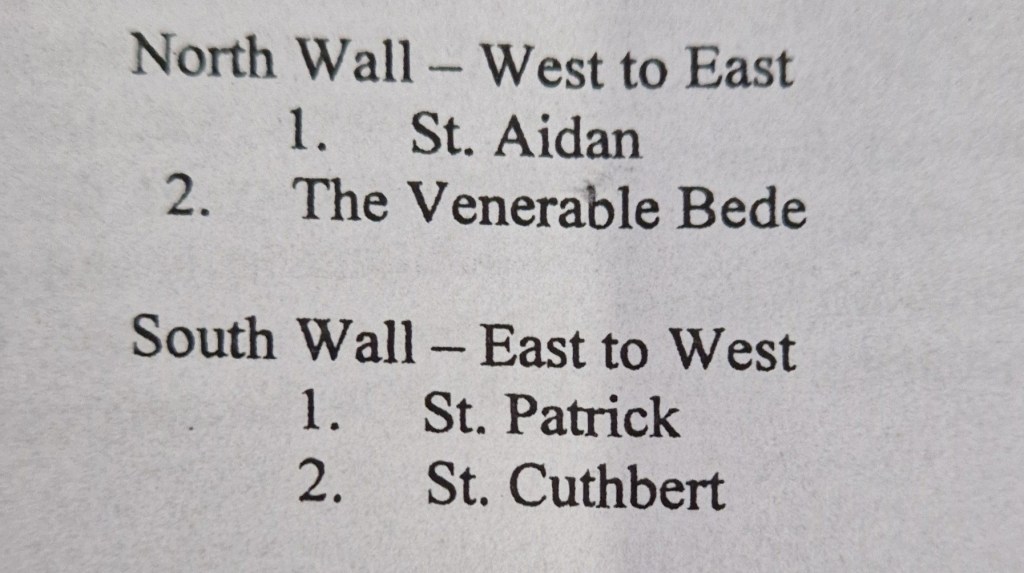
10. The four stained glass windows in the upper north and south walls of the sanctuary were donated by the Church Commissioners in the early 1950’s, as a memorial to the past Vicars of Tyldesley. Formerly of Bishopscourt, the residence of the Bishop of Manchester, the windows represent
11. The East Window has been in place since 1957. It replaces the original window which was damaged by mining subsidence and proved to be beyond repair. Here we can see the central figure of Christ clothed in priestly vestments and potrayed as The Great High Priest, thus calling to mind the Epistle to the Hebrews (4: 14) “Seeing we have a great high priest, that is passed into the heavens, Jesus the Son of God, let us hold fast to our profession”.
12. The beautiful mosaics which adorn the east wall of the church were presented in 1914 by Miss Ethel Hoyle. Decorated in Gold leaf they represent the figures of the four Evengelists. It can be noticed that John, who was reputedly the youngest, is seen without a beard.
13. On the reredos screen behind the altar can be seen a carved wooden cross with Greek letters Alpha & Omega set on either side of it. Being the first and last letters of the Greek alphabet, they symbolise the words from The Revelation of St. John (1:8) “I am the Alpha and Omega, the beginning and the ending, saith the Lord, which is, and which was, and which is to come, the Almighty”.
14. Looking upwards from the chancel towards the south-side of the church, you can see the four Evangelists depicted again in the clerestory windows. The symbol of each Evangelist can be seen potrayed at his feet, St. Matthew – A Man, St. Mark – A Lion, St. Luke – An Ox, St. John – An Eagle. The windows were erected in 1906, in memory of James & Mary Shuttleworth, and their two sons John and Richard.
15. The pulpit is not the origina one. The present pulpit probably dates from the time when extensive restoration work was carried out in the latter part of the nineteenth century, with the organ and choir stalls being moved from the upper gallery to the chancel. The original pulpit would have stood at a higher level and would have been fitted with a sounding board, known as a ‘tester’, behind the preacher’s head, to make him more audible to the congregation.
16. This window shows our risen Lord appearing to St. Mary Magdalene on the first Easter Day. The words from St. John’s gospel can be made out faintly below; “Jesus saith unto her, Mary. She turned herself and saith unto him, Rabboni; which is to say, Master”. (John 20: 16)
17. Here we can see the scene described in St. John’s gospel, immediately prior to the raising of Lazarus. Martha can be seen reproaching Jesus with the words; “Lord, if thou hadst been here, my brother would not have died. (John 11: 21). This was to lead to Jesus’ words, “I am the resurrection and the life, he that believeth in me, though he were dead, yet shall he live”. (John 11: 25)
18. This window displays the words of Jesus to his critics, “They that are whole need not a physician, but they that are sick”. (Matthew 9: 12). In their original context, these words were a reply to the Pharisees’ criticism of Jesus for his association with tax-gatherers and sinners. From the scen depicted here, however, we can see that the words have been reapplied tp potray our Lord’s ministry to sick people.
19. Here Jesus is shown as the Good Shepherd, who “lays down his life for the sheep” (John 10: 11). The words on the window are taken from the first verse of Psalm 23. “The Lord is my Shepherd, I shall not want”.
20. The final window illustrates the Epiphany of Our Lord – the “showing forth” of Jesus to the Gentiles in the form of the Wise Men., “They presented unto him gifts, Gold and Frankincense and Myrrh”. (Matthew 2: 11).
My Personal Final Thought’s
An incredible history for an incredible building, in putting this piece together I’ve personally learned an immense amount about the history of this amazing building, as well as it’s standing and influence within it’s community, it’s fair to say that church’s were very much the main focal point of town’s and village’s, and were held in the highest of respect, communities would donate to their church, and rally round to keep their church’s clean, presentable and well visited and used. It’s also fair to say that times have significantly changed, sadly church’s are not used anywhere near as much as they should be, and religion is being frowned upon, I find this very sad given everything is choice! If you decide to visit a church it does not make you a born again christian, it merely show’s you are open to different things, by visiting and looking around church’s such as St. George’s in Tyldesley does not mean you have to commit your soul to the church, it simply means you have an appreciation to the architecture and the building’s long history.
I’m fortunate to visit different church’s every week as part of my job of a Funeral Director, I find nothing more interesting than learning the history, looking at the building itself, and wandering the graveyards that serve as a library to people frozen in time, you learn how life was and how hard it was, taking St. George’s as a perfect example, as I strolled around the graveyard I was shocked at just how many children are buried here, in the 1800’s infant and child mortality in England was very high, this could have been attributed to Consumption, Stillborn, Bronchitis, Convulsions, Pneumonia, Inflammation, Diarroea, Dropsey and Natural Decay, listed were the top causes of death in infants/children in this period, could these of been linked to poor hygiene? Poverty? etc. Below were a few shots I took in the grave yard, rows, and rows of headstones, all listing childrens names, ages, and dates of death, very sad indeed.
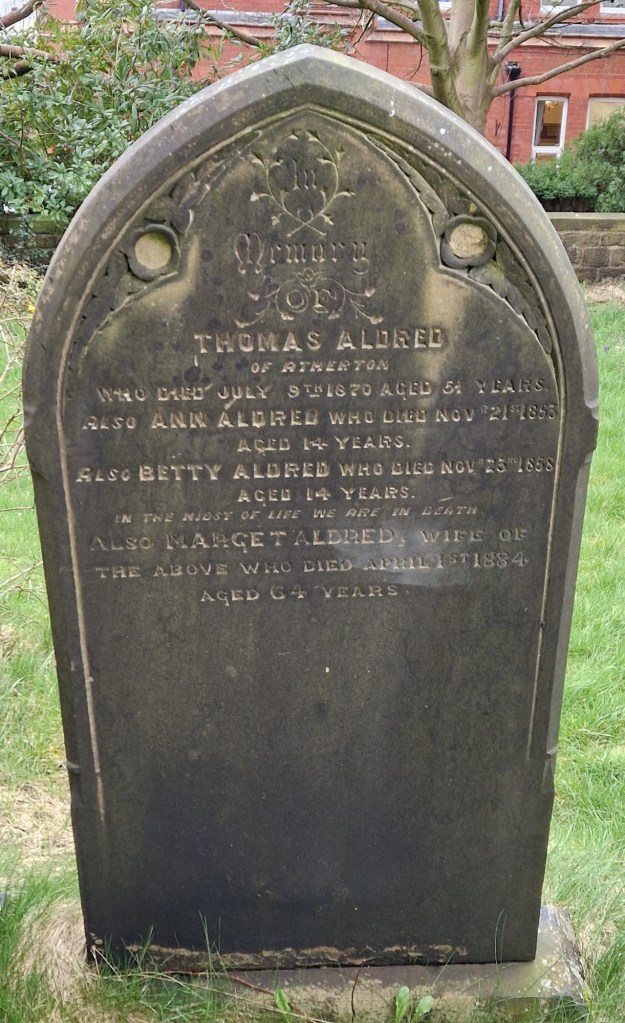
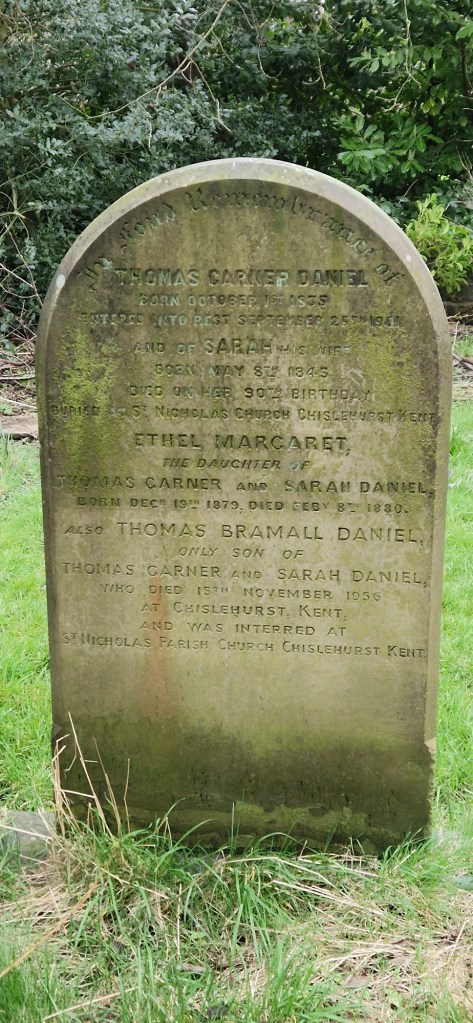
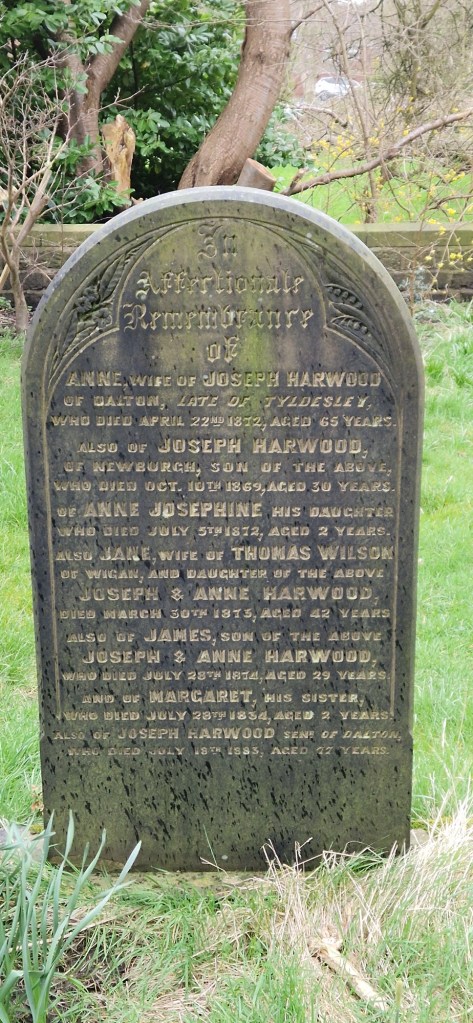
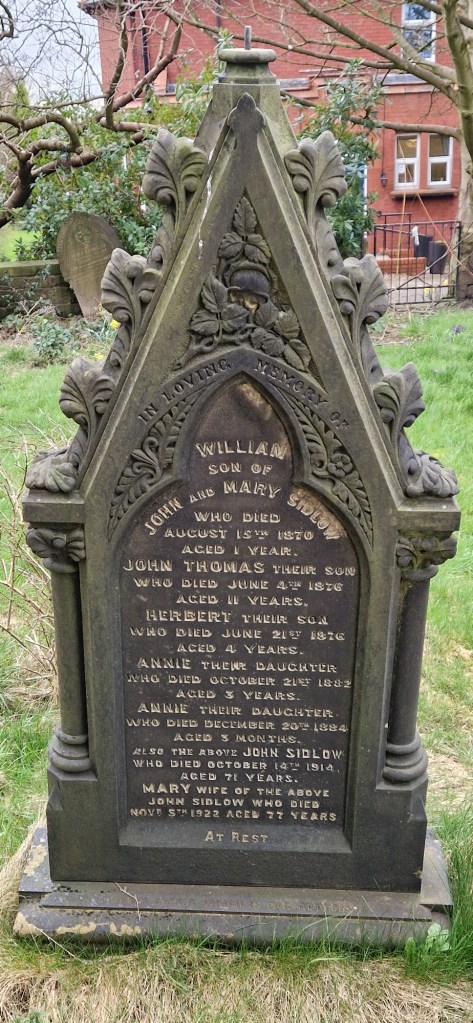
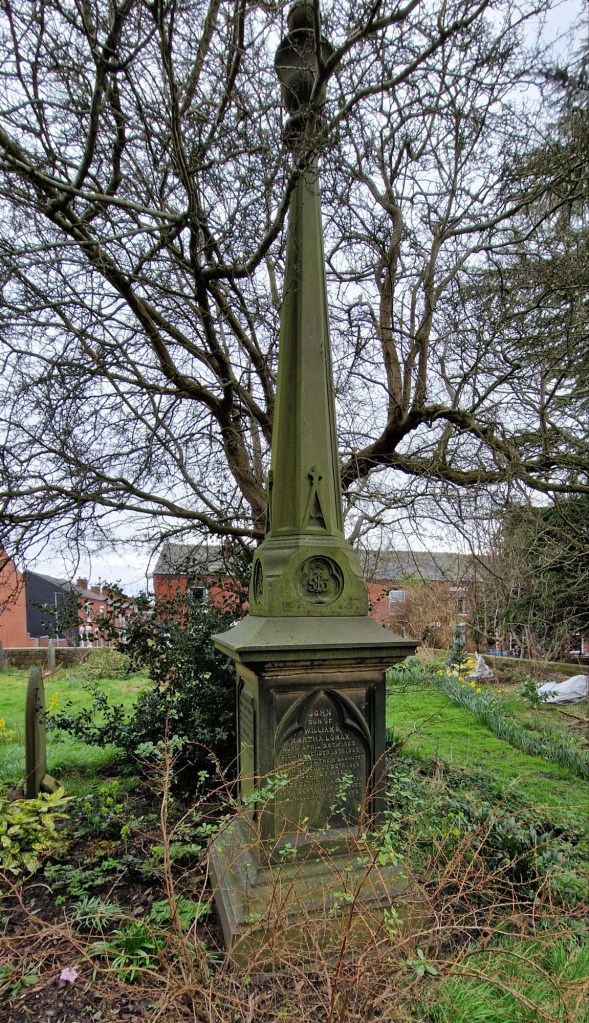
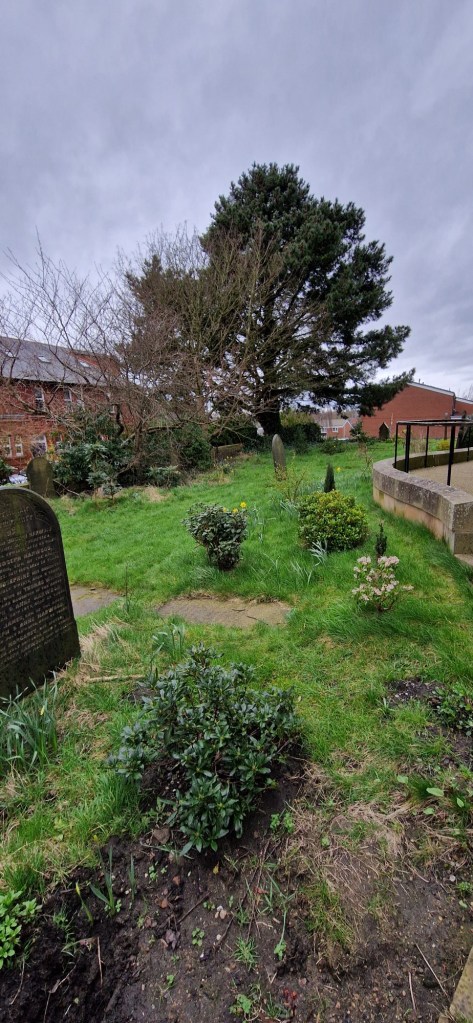

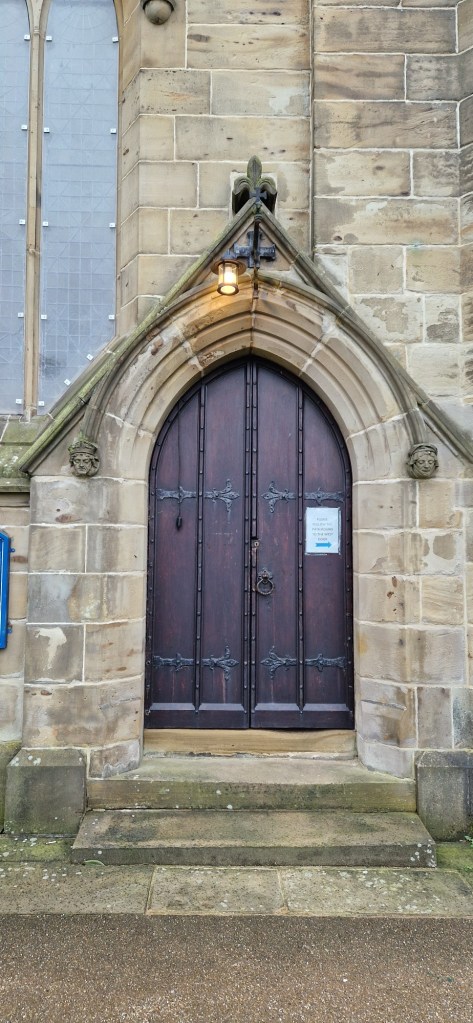
There are still a few unanswered visuals I saw , and when I asked the questions, no answers can be given? Maybe you have some knowledge and can answer them firstly (below). Are three pictures of a doorway no longer used? What was it for originally? On each side of the door are two figures heads intricatley carved in stone. Who are they? Why are they there? What do they represent?
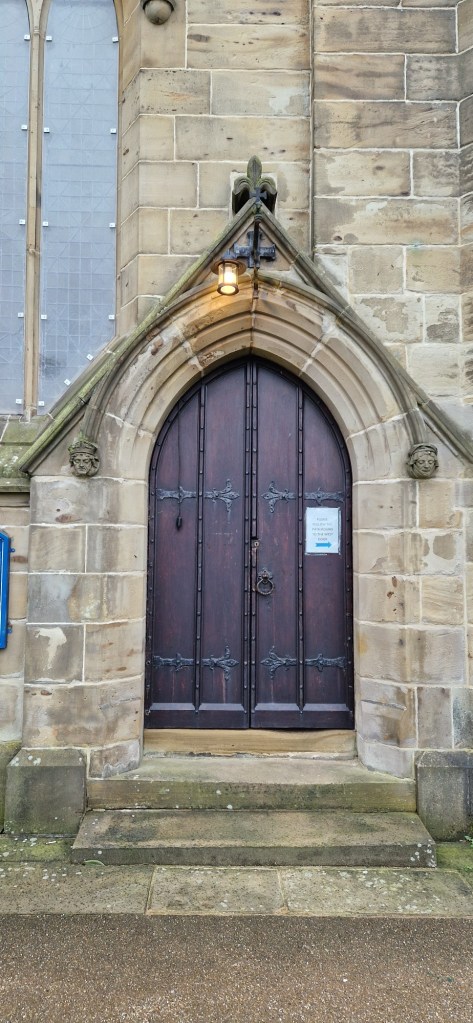
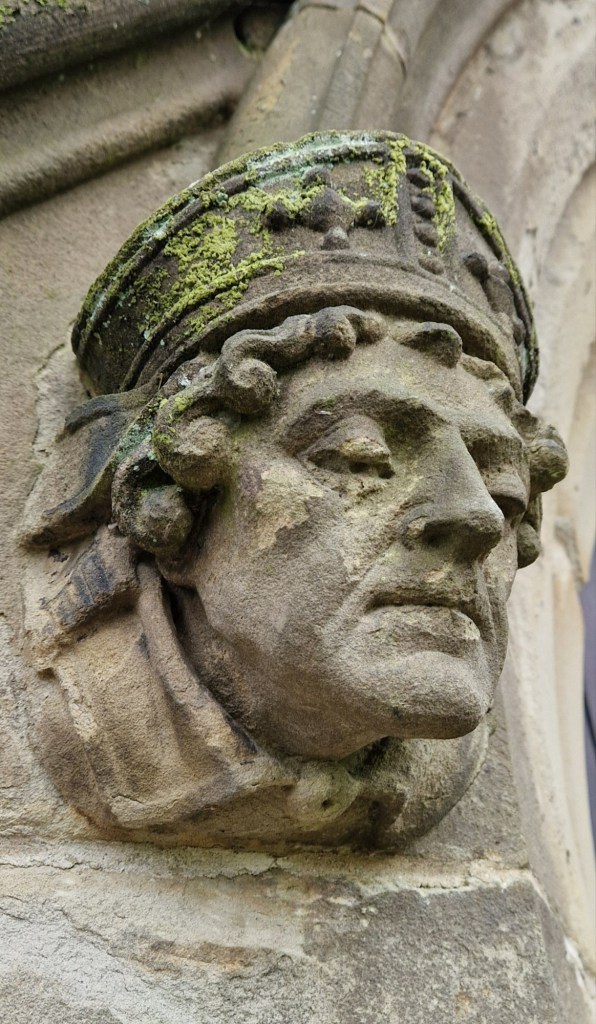

Also, the intricate design on columns rising above the church’s main building, why the design? Does it symbolise something? Who carved stone like this?

In conclusion this is amust visit church as are most in our town’s and village’s, cast aside the taboo and the stereotypical condesentions and go and look at this history sitting directly on your door step, I did and I was mesmerised pushing me to want to know more and more, I hope you get to visit the church, or have already been and want to share your thought’s, whatever your conclusions are thank you for reading the History of “St. George’s Church Tyldesley”

 Life Through Ordinary Eyes
Sorry if you feel that my comments below are too long.
A very interesting and well researched history of Tyldesley Parish Church, which revived my memories of it.
My family were the third generation to attend this church, and I was Christened there along with my twin brother and elder brother, who also joined the choir, and all three of us became servers.
We all of attended the infants and junior school in School Street, and joined the Church’s 1st Tyldesley St.George’s Scout Troop.
And it was not that our parents just dropped us off at the Church or school and went away, but they themselves were actively involved in the life, running and organisations in the church.
We lived in Squires Lane, and we immediately went to the church on that Saturday night in 1966, as soon as we had heard that the roof had caught fire, and whilst the fire was still ongoing, we assisted in carrying out the Altar and other items to safety, so that they didn’t suffer damage from falling debris. I still have a charred piece of wood that I picked up that night, from the floor in front of the altar.
Having later joined the Fire Brigade and served at Atherton Fire Station, I spoken to firemen that had attended the fire that night, and asked about what had caused it. I was told that it was because of a defective flue from the boiler, and it was due to roof timbers that had been placed in the chimney for support that had become heated over many years and ignited.
After the building had been repaired and started to be used again, Gareth and myself painted all the radiators in church with aluminium coloured paint.
My elder brother Geoffrey married there in 1967, and I myself was married there fifty years ago in August 1974. Through marrying we both moved out of the town. But we kept in touch with events and happenings at the church through my twin brother Gareth, who was a Church Warden, as well as being Secretary and Treasurer of the P.C.C. That was until his untimely death on 30th April 2004 at the age of 56, when he died in an operating theatre whilst having a hip replaced. This was through having had a hip broken in an accident 8 days earlier, and which needed to be replaced.
After three inquests into the cause of Gareth’s death, the coroner ruled that he had died in the operating theatre as a result of an accident, brought on by the hospitals neglect!
In your research note above you ask the question about a door that is no longer used, which has a stone figure carved at head height into the wall on either side of the door frame.
Though all my time in attending the church, this North facing door was the main entrance into and exit from the church. The West door was only ever opened to carry a deceased person’s coffin in and out of the church, and allow family mourners to follow behind. Anyone else wanting to attend a funeral, would enter and exit through the North door.
My father John Wilkinson took up photography as a hobby, and he expanded on this by taking many photographs of events inside and outside of church, including walking days, socials etc.
If fact if they are still there, there used to be pictures that he had taken and signed in the 1960’s, these were positioned on the walls in the lobby area inside the West door.
He also expanded his expertise, by fulfilling his weekends to take couples wedding photographs, which he did for many years, and after he had taken all the photographs inside church of the actual wedding, and of the married couple exiting down the aisle, the first picture to be taken outside was of the newlywed couple and the minister who conducted the service. The three of them would be standing on the steps in front of the closed North door, which they would have exited a few minutes earlier.
If there happened to be a large number of people in church for the wedding, then the West door would be opened to allow everyone to leave much quicker, rather than using the main door. Because the main door would remain closed for a short period of time whilst more photographs were being taken.
Regarding the question about stone heads on either side of the door. It was not a question I had ever asked about, as to who or why they were there. But it is not uncommon to find such heads in similar positions at other churches built during the 19th century or even earlier, They could be of a religious person or a representative of the churches patrons or parishioners.
I only ever get to return to the church these days for funerals. Sadly, a former work colleague who lived in Tyldesley died aged 91 on 4th January. So I expect that possibly before the end of January, I will be going there to attend his funeral.
Regards.
Stuart Wilkinson
LikeLiked by 1 person
Stuart as the youngest of 4 daughters of the Revd Oliver St. John vicar of Tyldesley’s parish church from 1960-1972 I remember the names of your family well as you were all so active in the church. I was sorry to hear of your twin brother’s early death. Indeed it was my father’s early death at the age of 58 that sadly ended his ministry to the people of Tyldesley .The Hindleys the Jacks, Pearsons and Wilkinsons are all people my mother, widowed by 53 years old spoke of with much affection long after she had moved away from the vicarage. During our time in Tyldesley I and my three sisters all had our weddings at St Georges church officiated by our father and very likely photographed by yours! My best wishes to your family. VS
LikeLiked by 1 person
Dear Stuart
First of all let me explain who I am, so that you’ll know who you are talking to! I’m Vyvian, eldest of Oliver St John’s four daughters. You’ll remember him as vicar of Tyldesley from 1960 -1972. Such happy times, mostly. In 1966 I was in the process of moving to London to work, but I used to come home at weekends and I know that I was definitely there on the night of the fire. Returning from an evening out with my then boyfriend, from a vantage point somewhere off the M62, I could see fire engines tearing along in the direction of Tyldesley. I didn’t give it much thought until, instead of continuing towards Atherton, they were assembled on my doorstep WOW. Well the rest is history! Very brave of you and your brothers to go into the church and rescue so much stuff.
I left home more or less permanently after that and went to work abroad, but not before I sold my rather ancient Ford Popular to your brother Geoffrey. It was a good runner so I hope he had some use out of it. Moving on several years the Foreign Office sent me to work in Zambia, where I met my husband, Paddy Maudsley. We came home to be married in 1972, by my father, and who took the photos? Your dad, of course! Strange to think that people enquire about the door. I suppose I knew there was a west door, but always used the north door and I have pictures to prove it. Sorry to hear about Gareth. A shock for you all.
With kind regards
Vyvian Maudsley nee St John
LikeLiked by 1 person
Hello Vyvian, this is Stuart Wilkinson. I still have very fond memories of your father and mother and children coming to Tyldesley and living in the large Vicarage. It is lovely to read the comments of both Vanessa and yourself. However I must make one correction regarding the sale of your 1960 model Ford Popular, whose registration number was 8004 NA. It was one saturday morning in 1966 as I was walking home from shopping as usual, that as I passed the Vicarage entrance gate, when I noticed the car was parked in the driveway, and Stanley Taylor who was a sidesman at church and who also lived in Squires Lane, was standing next to it, so I went to speak to him. He told me that you were trading the car in that day at Exchange & Mart on Manchester Road for a new car. This was apparently because you had got a new job in a Government Department in London. I then asked if you might let me buy the car, but could I first take it down to show my father for his opinion. Thankfully he said yes, although my brother Geoffrey said that he thought he should have it instead of me. But my mother interceded and came down on my side, and I then drove back to see you, and bought your car for the £100 that the garage were going to give you when you exchanged it. At the time I was an apprentice mechanic at William’s Motor Co. in Manchester, and I also used to take your Father’s Wolseley 1500 to work with me, where I personally serviced it. But your Ford Popular was my first car, and it was wonderful and never let me down. It always stayed outside and my mother was amazed that it always started whether in stood in rain or snow, and said she was sad to see it go to the scrap yard in 1970. This was because the bodywork underneath had become rotten, through never having been protectively undersealed when it was originally built, like cars are today. Sadly I am the only member of the Wilkinson family that you knew that is still alive, Geoffrey died aged 78 on his birthday in 2021. Regarding my father taking photographs. I still have a box full of photographs that my father took, of events during the life of Tyldesley Parish Church, some of which include your father and mother. If you would like copies of these, then please email me at stuart.wilkinson999@gmail.com and I will gladly scan them, and send them to you.
With very kind regards to all your families.
Stuart XX
LikeLike