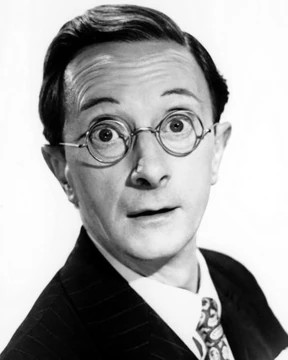
The story of Charles Hawtrey is one of those uncomfortable reminders that the people who make us laugh are not always the ones living the happiest lives.
To cinema audiences he was instantly recognisable. The round glasses, the fluttering voice, the nervous little glances that seemed to say he knew more than he was letting on. In the Carry On films he perfected a kind of comic vulnerability. While Sid James roared and Kenneth Williams delivered his outrage to the heavens, Hawtrey specialised in the anxious little man caught in the middle of chaos. His humour was quieter, more delicate — but no less memorable.
By the time the Carry On series made him famous, Hawtrey had already spent most of his life in showbusiness. Born George Frederick Joffre Hartree in 1914, he began acting as a child and worked steadily through theatre, radio and film. Those who worked with him often said he possessed an almost instinctive comic timing. Kenneth Williams once wrote that Hawtrey had “a curious, delicate way of landing a laugh without seeming to try”.
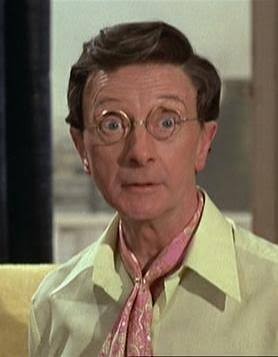
But Williams also saw the darker side. In his diaries he described Hawtrey as “touchy, defensive and rather too fond of drink”.
On the Carry On sets Hawtrey could be both charming and difficult. Some crew members remembered him as shy and perfectly polite. Others found him unpredictable. He had a habit of slipping away during breaks to find the nearest pub, something that irritated producer Peter Rogers more than once. Even so, when the cameras rolled he rarely let anyone down. Director Gerald Thomas later said that Hawtrey might be a nuisance beforehand, “but once the camera was on him he was exactly the man you needed.”
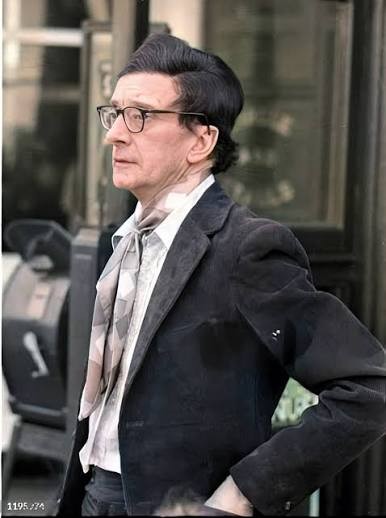
Despite his popularity with audiences, Hawtrey felt overlooked. He believed he was underpaid compared with some of his co-stars and resented the growing prominence of Sid James as the series’ leading figure. One colleague later recalled him saying bitterly, “They’ve forgotten who helped build these films.”
By the early 1970s his relationship with the producers had broken down completely and the roles stopped coming. Hawtrey withdrew from the industry and moved to Deal, a quiet seaside town in Kent.
There he became something of a familiar but slightly melancholy sight. Locals would see him walking along the seafront in worn coats or sitting alone in pubs. Some remembered him as friendly enough; others simply saw a man who seemed very alone. One publican later said, “He wasn’t unpleasant at all — just terribly solitary.”
His house reflected the same feeling. Visitors described rooms filled with old theatre posters, scripts and photographs from the years when work had been plentiful. It was as though he had surrounded himself with reminders of the life he once had.
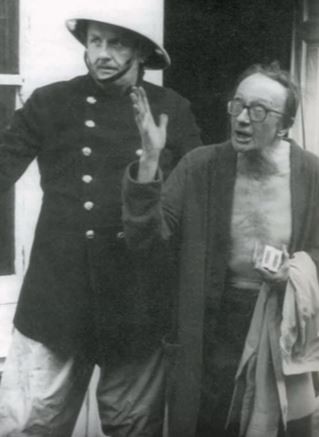
Then came the final, cruel turn. In 1988 a fire broke out in Hawtrey’s house after he fell asleep while drinking and smoking in bed. The blaze caused devastating injuries and he was taken to hospital, where doctors said both of his legs would need to be amputated to save his life. However, he refused and said, “I’d rather die with my boots on.”
Even then he showed flashes of the dry humour that had defined his career. A nurse later recalled him remarking weakly, “I suppose this means fewer curtain calls.”
He died not long afterwards, on 27 October 1988, aged 73.
His funeral in Deal was a quiet affair. Only a small number of people attended. Among them were fellow Carry On actors Kenneth Connor and Jack Douglas, along with a few friends from theatre and local acquaintances. Many of the larger names from the films were absent, a reminder of how far Hawtrey had drifted from the world he once belonged to.
Yet his work remains unmistakable. Those nervous glances, the perfectly timed reactions, the peculiar comic fragility he brought to every scene — they were entirely his own.
Kenneth Williams once wrote of him with a mixture of affection and sadness: “Poor Charles… he always seemed so fragile, as though the world might knock him over if it pushed too hard.”
Looking back now, it is difficult not to feel that he was right.
 Life Through Ordinary Eyes